
Data Centre Cooling Solutions
As data centre cooling architectures evolve, the industry is increasingly recognising a simple but critical truth: every cooling strategy ultimately succeeds or fails at the primary cooling level. Whether heat is removed by air, direct-to-chip cold plates or full immersion systems, the thermal journey always begins — and ends — with the primary cooling system. This is the essence of a “Chiller to Chip” mindset.
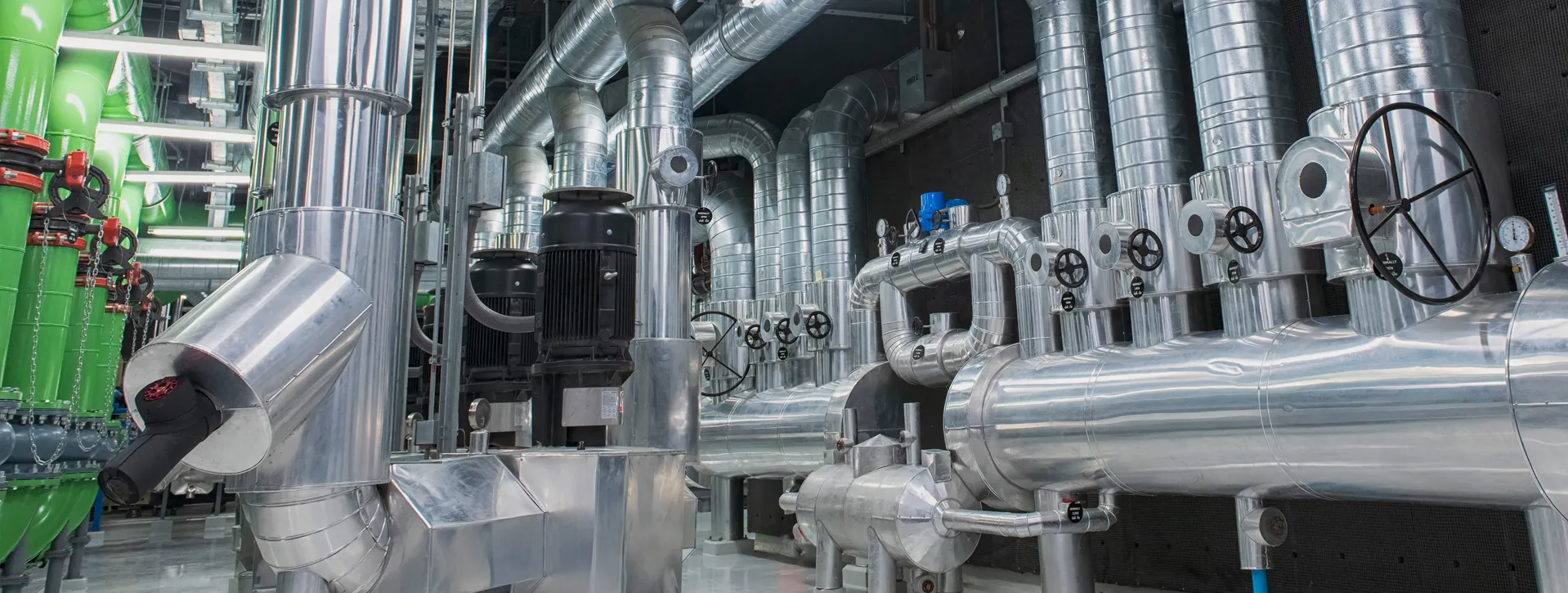
Chillers, facility cooling loops, dry coolers and hybrid heat rejection systems form the first link in the thermal chain. Their role is to remove heat from the facility efficiently and reliably, providing a stable temperature and flow regime to everything downstream. If the primary cooling system is poorly designed, incorrectly specified or inadequately maintained, no amount of innovation at the rack level can compensate.
Direct-to-chip cooling, immersion cooling, CRAH and CRAC systems may look very different at the point of heat capture, but they all rely on the same fundamentals:
In a hybrid data centre, the primary cooling system supports air handling units for room-level cooling, while simultaneously feeding CDUs that service direct-to-chip or immersion deployments. This means it is not just a utility, but a shared critical system that underpins the entire cooling architecture.
At the centre of primary cooling performance is the thermal fluid itself — most commonly a glycol-based solution. Fluid selection is not a commodity decision; it directly influences heat transfer efficiency, pumping energy, material compatibility, environmental impact and long-term reliability.
Key considerations include:
An incorrectly specified or degraded thermal fluid increases pumping energy reduces heat exchanger effectiveness and introduces hidden failure modes that erode uptime over time.
Traditional ethylene glycol (EG) offers excellent heat transfer properties and lower viscosity than propylene glycol (PG) but is toxic and requires stringent handling and spill protocols. Propylene glycol, in contrast, is much less toxic and safer for enclosed environments and personnel exposure—making it a preferred choice for data centres concerned with operational safety and environmental compliance.
That said, standard propylene glycols often have lower thermodynamic performance compared to EG blends, creating a performance-safety trade-off that designers and operators must address. This is where advanced fluids like Castrol On Primary Cooling Fluid DTX provide a compelling alternative.
DTX advanced thermal fluid delivers the thermodynamic and hydrodynamic performance advantages typically associated with ethylene glycol-based fluids - while maintaining the low-toxicity credentials that make propylene glycol suitable for sensitive applications. In doing so, it removes the long-standing trade-off between performance and safety that has shaped cooling system design for decades.
With significantly lower viscosity, particularly at low temperatures DTX® reduces the energy required to circulate fluid around the system. At the same time, its enhanced thermal performance improves heat exchange efficiency. In real-world terms, converting from propylene glycol to DTX® has been shown to increase system Coefficient of Performance (COP) by more than 10%, while delivering comparable reductions in energy consumption and carbon emissions.
Primary cooling efficiency is not static. Over time, thermal fluids degrade due to thermal stress, contamination, oxidation and dilution. Without active fluid management and monitoring, performance slowly drifts away from design intent — often unnoticed until failures occur.
Best practice primary cooling strategies therefore include:
This approach supports not only efficiency, but also predictability, which is essential for high-density computing environments.
From a Chiller-to-Chip perspective, primary cooling is the first and most important design decision. It defines how effectively heat can be removed, how resilient the system is under variable loads, and how sustainably the data centre can operate over its lifecycle.
DC Cooling Solutions focus on this foundational layer — combining a unique range of thermal fluids and performance enhancing additives, together with expertise in fluid dynamics, cooling system design and chem-mech site services to ensure that advanced cooling architectures deliver real-world results, not just theoretical performance.
In an era of rising densities and hybrid cooling systems, the message is clear: get the primary cooling right first — everything else depends on it.
Copyright © 2026. All Rights Reserved Liquitherm Technologies Group Ltd. CASTROL and the Castrol logo are trade marks of Castrol Limited, used with permission.

Getting information - please wait.