
Data Centre Cooling Solutions
As data centre cooling architectures continue to evolve, the role of glycol is becoming increasingly strategic. No longer limited to freeze protection, glycol now directly impacts energy efficiency, system performance, and long-term reliability. This is particularly true as modern designs incorporate more ambient-exposed infrastructure, where fluid selection becomes a critical determinant of overall system behaviour.
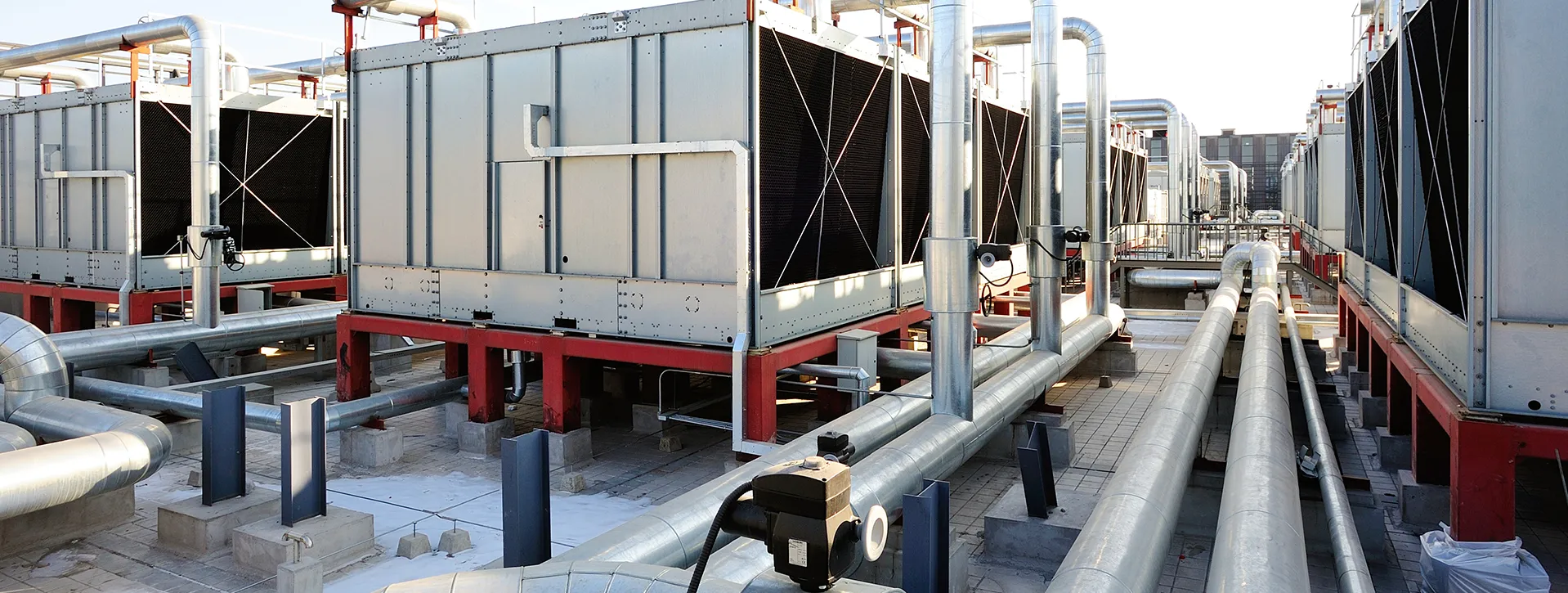
In today’s architectures, glycol is essential within primary cooling infrastructure exposed to ambient conditions, where freeze risk, uptime, and energy performance must all be carefully balanced.
These areas include:
As data centres continue to adopt air-cooled and economised designs, a growing proportion of cooling infrastructure operates outside tightly controlled environments. In these conditions, glycol becomes a core enabler of reliable, year-round operation.
Any part of the cooling system exposed to low ambient temperatures is at risk of freezing. Without appropriate fluid protection, this can result in:
Even short sections of exposed pipework can become single points of failure.
For operators, glycol is therefore not just a protective measure — it is a critical component of system resilience and uptime assurance.
While glycol is essential, fluid selection has a direct impact on energy efficiency and system performance.
Traditionally, operators have had to balance performance against safety:
Ethylene Glycol (EG) — High Performance, Higher Risk
However:
Propylene Glycol (PG) — Safer, but Less Efficient
But:
At scale, these limitations translate directly into higher energy consumption and operating cost.
Castrol On Primary Cooling Fluid DTX has been engineered to remove this compromise.
It delivers:
Proven Performance Gains vs Propylene Glycol
In new system designs, this performance can also enable:
Castrol On Primary Cooling Fluid DTX is specifically developed for demanding cooling environments, offering:
DTX is already proven in highly demanding applications including, food and beverage process cooling, medical devices used in surgery, and advanced aerospace cooling systems.
Selecting the right glycol is only part of the equation. In data centre cooling systems, how the fluid is monitored, maintained, and managed over time has a direct impact on efficiency, reliability, and asset life. Without a structured fluid management approach, even high-quality glycol can degrade, leading to:
These issues are often invisible in the short term, but over time can significantly impact:
Castrol ON End-to-End Fluid Management Solutions are designed to ensure that cooling fluids continue to perform as intended throughout their operational life. This includes:
By combining high-performance fluids like DTX with proactive lifecycle management, operators can maintain consistent thermal efficiency, reduce unplanned maintenance and downtime, and extend system and fluid life
Copyright © 2026. All Rights Reserved Liquitherm Technologies Group Ltd. CASTROL and the Castrol logo are trade marks of Castrol Limited, used with permission.

Getting information - please wait.